
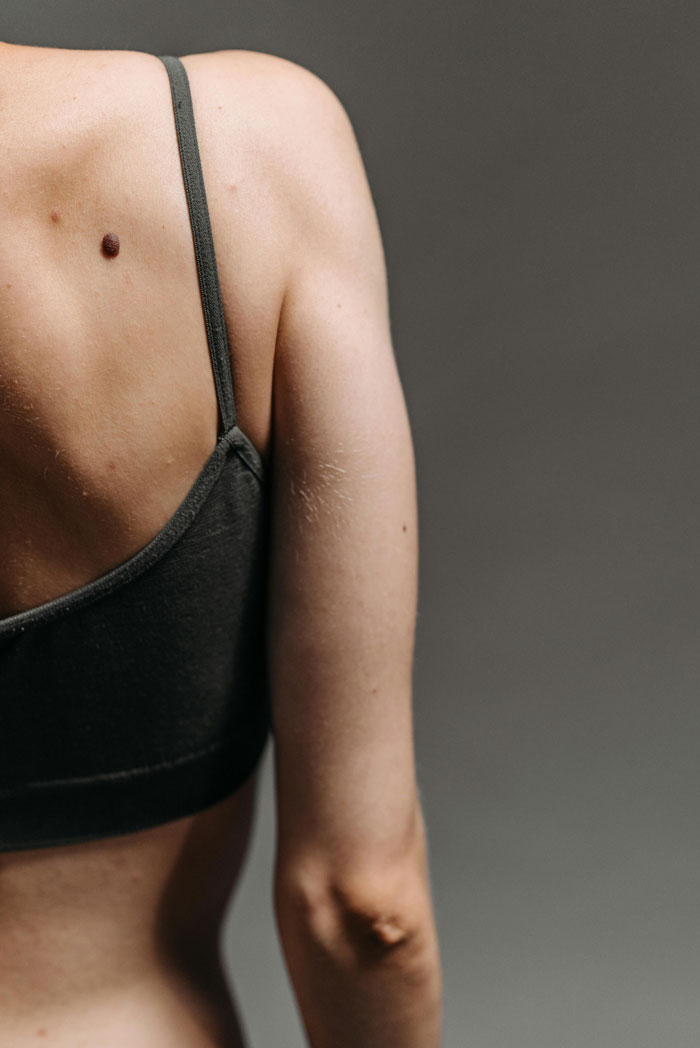
Lesion Removal and Scar Revision
Summary Guide
Our clinicians will thoroughly explain your procedure and answer any questions you may have. We will create a bespoke treatment plan tailored to your needs.
Duration: 15 – 30 minutes
Anaesthetic: local anaesthetic
Downtime: none
Noticeable results: immediate
Length of results: permanent
Book Online
What is Skin Lesion Removal?
Skin lesion removal involves minor surgical procedures to excise benign or suspicious skin lesions for diagnostic or aesthetic reasons. Common lesions include cysts, lipomas, moles, skin tags and other superficial growths.

Procedures are typically performed under local anaesthetic as a day-case treatment. The lesion is carefully removed and, where appropriate, sent for histological examination to confirm diagnosis.

In addition to lesion excision, minor scar revision procedures may be performed to improve contour, symmetry or scar quality following previous injury or surgery.

Treatment is tailored to the type, size and location of the lesion, with attention to minimising scarring while ensuring complete and safe removal.
At The Oxley, every skin lesion and scar removal procedure is carefully tailored to your individual anatomy and treatment goals. Our approach focuses on achieving the best possible functional and aesthetic outcome, while preserving healthy surrounding skin. By using precise techniques and personalised treatment planning, we aim to support optimal healing and natural-looking results.
What is Scar Revision?
Scar revision refers to a range of treatments designed to improve the appearance, texture or contour of existing scars. Scars may become raised, widened, indented or tethered, and can develop following surgery, injury or skin conditions.

Management depends on the scar type and may include minor surgical revision under local anaesthetic, corticosteroid injection for hypertrophic or keloid scars, or non-surgical therapies such as silicone-based treatments. In selected cases, combination approaches are used to optimise scar maturation and appearance.

The aim of scar revision is improvement rather than complete removal, with treatment tailored to scar characteristics, location and individual healing response.
What Skin Lesions Can We Treat?
Skin lesion removal can be used to treat a wide range of common, cancerous or non-cancerous skin concerns. These include moles, skin tags, cysts, lipomas, warts, seborrhoeic keratoses, and benign lumps or growths.

Trauma-related issues such as split earlobes and certain scars may also be treated. Each lesion is assessed individually to determine the most appropriate treatment approach, with a focus on safety, effective removal, and the best possible cosmetic outcome.
How are Skin Lesions Treated and Removed?
The method used to remove a skin lesion depends on its type, size, and location on the body. In many cases, removal is straightforward and may involve a simple biopsy, shaving or scraping the lesion, or freezing it with cryotherapy.

If surgical excision is required, the area may be left to heal naturally or closed with stitches. Larger or more complex lesions may need reconstructive techniques, such as skin grafts or local flaps, to achieve the best functional and cosmetic outcome.
Skin Lesion Removal Aftercare & Recovery
Aftercare: Skin lesion removal is usually performed under local anaesthetic, and you may return home shortly afterwards. The treated area may feel numb for several hours. Mild discomfort is common and is typically managed with simple analgesia. Specific instructions will be provided regarding dressings and activity.

Recovery: Healing time varies depending on the size and location of the lesion and the method of closure. Sutures may be dissolvable or removed at an appropriate interval depending on the anatomical site. Minor redness and firmness can persist for several weeks as the scar matures.

Wound Care: The area should be kept clean and dry initially, with gentle cleansing once advised. Dressings should be changed as directed, and excessive tension or trauma to the site avoided. Scar care guidance will be provided where appropriate to support optimal healing.
Side Effects & Complications of Skin Lesion Removal
Skin lesion removal can cause mild, temporary side effects such as pain, swelling, redness, and scarring. Some treatments may also lead to skin irritation or colour changes. Less common complications include infection, bleeding, numbness, or raised (keloid) scars. Your doctor will explain the risks beforehand and advise you if any problems develop.
What is skin lesion removal?

Skin lesion removal is a minor surgical procedure used to remove non-cancerous growths such as moles, skin tags, cysts, lipomas, and warts. The aim is to safely remove the lesion while achieving the best possible cosmetic result.

What types of skin lesions can be removed?

Common treatable lesions include moles, skin tags, seborrhoeic keratoses, cysts, lipomas, warts, benign lumps, and certain pigmented lesions. Trauma-related concerns such as split earlobes and some scars can also be treated.

Is skin lesion removal painful?

Most skin lesion removals are performed under local anaesthetic, meaning the area is fully numbed. Patients may feel pressure during the procedure, but it should not be painful.

Will skin lesion removal leave a scar?

Any procedure that breaks the skin can leave a scar, but careful surgical techniques are used to minimise scarring. The final appearance depends on the lesion type, location, and individual healing response.

How long does skin lesion or scar removal take to heal?

Initial healing usually takes 1–2 weeks, depending on the size and location of the lesion. Scar maturation continues over several months, with gradual improvement in appearance.

Can the NHS remove skin lesions or scars?

The NHS prioritises urgent or suspected cancerous lesions. Benign lesions and trauma scars are often considered low priority or cosmetic, which can lead to long waiting times or ineligibility for treatment.

Do removed skin lesions need to be tested?

In some cases, removed lesions are sent for histological analysis to confirm the diagnosis. This is discussed during your consultation and depends on the type and appearance of the lesion.

Who is suitable for skin lesion and scar removal?

Most adults with non-urgent, non-cancerous skin lesions or scars are suitable. A full assessment is carried out to ensure the lesion is appropriate for treatment and to rule out any medical concerns.